You’re bleeding money on ads. Visitors are landing on your pages, but they’re not converting. And somewhere in the back of your mind, you’re wondering: “Is it my offer… or is it my landing page tool?”
Here’s what nobody tells you: the wrong platform can quietly sabotage your conversion rates while charging you hundreds of dollars per month for the privilege.
I’ve watched businesses waste six months and thousands of dollars on the wrong choice between Instapage and ClickFunnels. They pick based on flashy features or what some guru recommended, only to realize later it was completely mismatched to how they actually run campaigns.
The difference between these platforms isn’t just pricing or features—it’s whether you’ll wake up six months from now celebrating double-digit conversion rates or desperately searching for “how to cancel my subscription.”
So let’s settle this once and for all: which platform actually converts better in 2026, and more importantly, which one is right for the way you do business?
Understanding What You’re Actually Comparing
Before we dive into features and pricing, there’s something crucial you need to understand: Instapage and ClickFunnels aren’t playing the same game.
Instapage: The Precision Landing Page Specialist
Instapage exists for one singular purpose: creating stunning, high-converting landing pages. Think of it as the boutique agency that does one thing exceptionally well.
When you’re running Google Ads, Facebook campaigns, or any paid traffic strategy, Instapage helps you craft pixel-perfect landing pages that match your ad messaging and convert visitors into leads or customers.
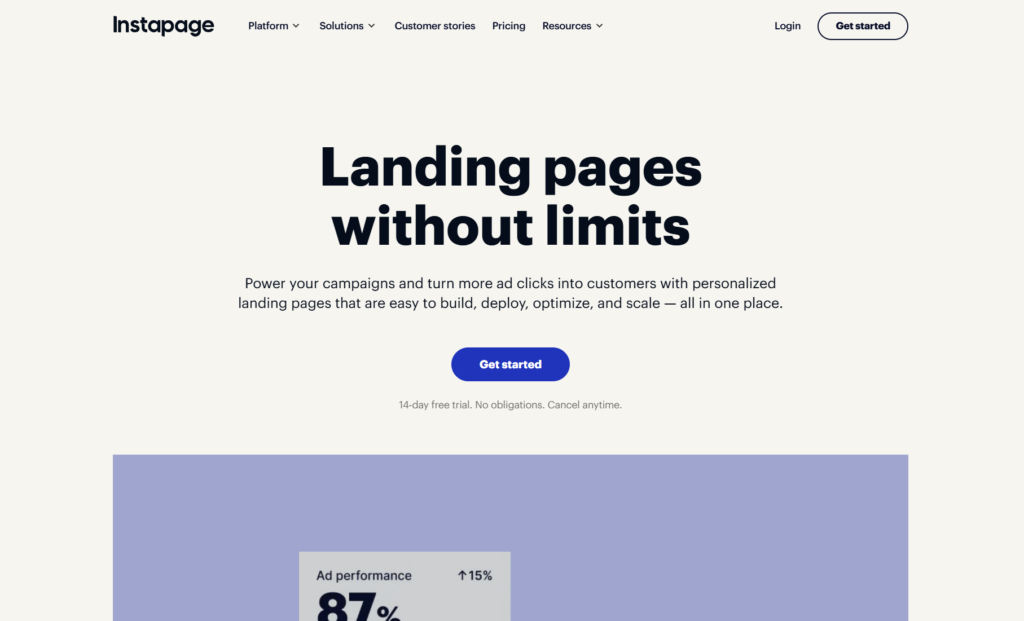
The platform shines brightest when you need multiple landing page variations for different audience segments, all while maintaining brand consistency across your campaigns. It’s built for marketers who live and breathe PPC advertising.
ClickFunnels: The Complete Marketing Ecosystem
ClickFunnels started as a landing page builder but has evolved into something more ambitious, a complete business-in-a-box solution. Beyond landing pages, you get email marketing automation, membership site capabilities, course hosting, payment processing, and even an affiliate management system.
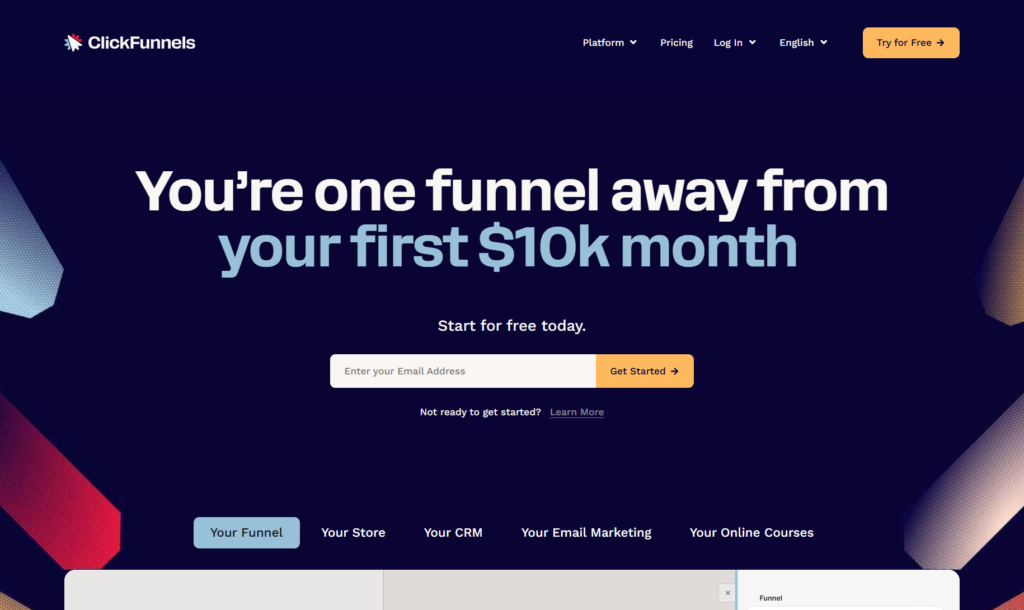
The philosophy here is different: instead of creating isolated landing pages, ClickFunnels helps you build entire sales funnels that guide prospects through multiple steps—from initial opt-in to purchase to upsells and beyond. Everything happens under one roof, which is either liberating or overwhelming, depending on your perspective.
The 2026 Pricing Reality Check
Let’s talk money, because both platforms have made significant pricing changes heading into 2026.
Instapage Pricing Structure
Instapage currently offers two main pricing tiers. The Business plan starts at $199 per month when billed monthly (or $149 monthly when paid annually), supporting up to 30,000 monthly visitors, 30 landing pages, 5 subaccounts, and 5 team members.
For organizations requiring more robust features and higher limits, the Enterprise plan offers custom pricing.
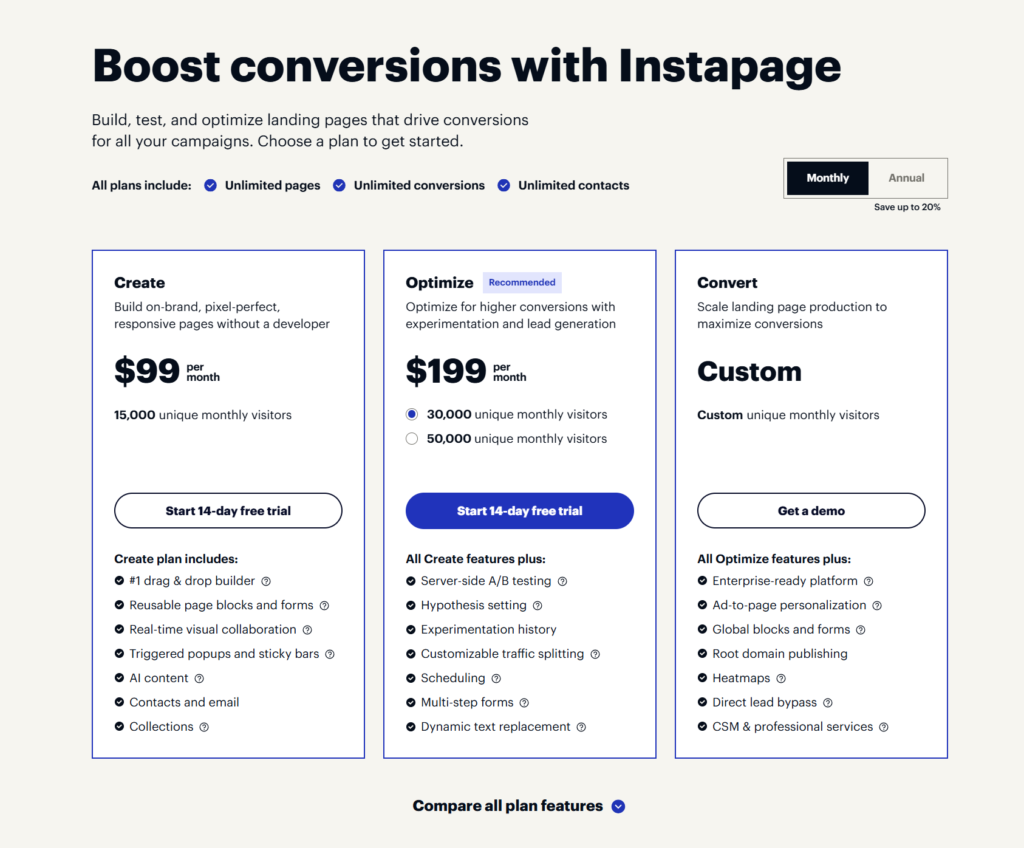
Here’s where things get interesting: Instapage doesn’t offer a free plan, but you can test everything through their 14-day free trial—no credit card required. This gives you full access to evaluate whether the platform’s precision tooling justifies the investment.
The catch? Many users report that pricing feels high, particularly for startups and small businesses, with essential features sometimes locked behind expensive enterprise-level plans. You’re paying premium prices for premium landing page capabilities.
ClickFunnels Pricing Options
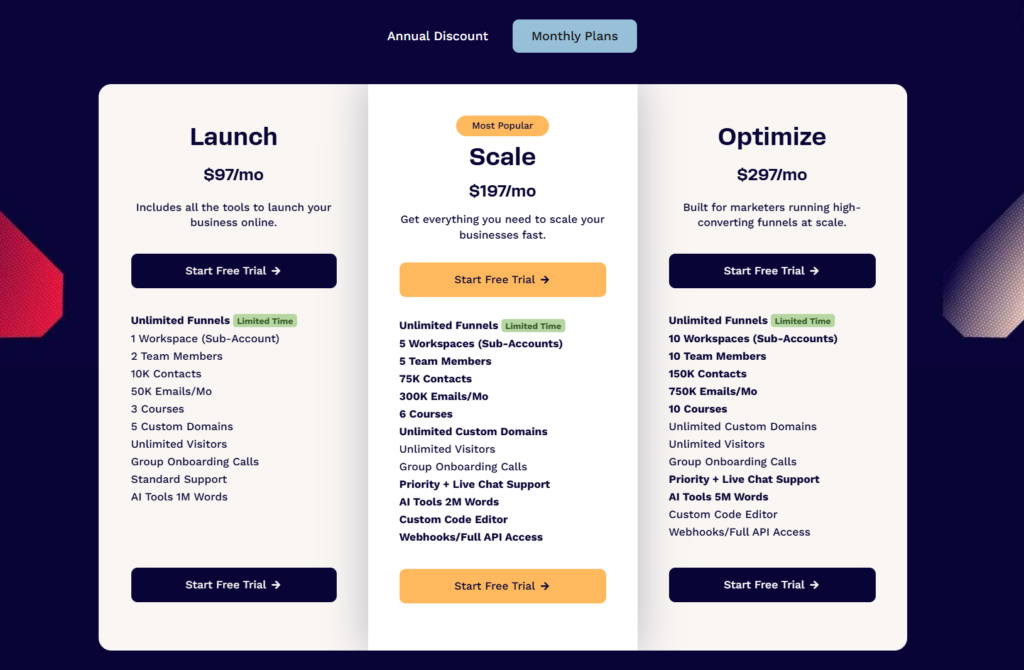
ClickFunnels restructured their pricing in 2025, and the current landscape looks like this:
Launch Plan: $97/month (or $81/month annually) – This entry-level plan includes unlimited funnels, courses, and domains, but caps you at 3 brand workspaces, 10,000 contacts, and 20,000 monthly visits.
Scale Plan: (Pricing sits between Launch and Optimize) – Expands your limits with 5 workspaces, 50,000 contacts, and 200,000 monthly visits.
Optimize Plan: $297/month – The sweet spot for established businesses, offering 10 workspaces, 150,000 contacts, and 750,000 monthly emails.
Dominate Plan: $5,997 annually – This enterprise option includes everything plus dedicated onboarding and priority support.
All plans come with a 14-day free trial plus a 30-day money-back guarantee, giving you essentially 44 days to evaluate whether ClickFunnels fits your workflow.
The Real Cost Comparison
On paper, ClickFunnels appears more affordable at the entry level—$97 vs $199. But here’s what that misses:
ClickFunnels bundles everything together. You’re paying for email automation, membership sites, and checkout systems whether you need them or not. Instapage charges more but delivers specialized landing page tools that agencies and PPC marketers actually use daily.
If you only need landing pages and already have email marketing covered through ActiveCampaign or ConvertKit, paying for ClickFunnels’ bundled features makes little sense. Conversely, if you’re building an entire business from scratch and need every tool in the box, ClickFunnels’ all-in-one approach could actually save money compared to cobbling together multiple subscriptions.
Landing Page Builder Showdown: Where Conversions Actually Happen
This is where rubber meets road. How do these platforms actually perform when it comes to creating pages that convert?
Design Flexibility and Editor Quality
Instapage Takes the Crown Here
Instapage’s drag-and-drop functionality scores 9.2 out of 10 with users, allowing seamless page customization with pixel-perfect precision. The editor feels like working with professional design software—you have complete control over every element’s positioning, spacing, and styling.
The platform offers over 500 conversion-tested templates across different industries. More importantly, every template is modern, clean, and doesn’t scream “please buy this now” the moment someone lands on it. You’re getting landing pages that could pass for custom-designed websites.
ClickFunnels’ editor, while user-friendly and scoring a respectable 9.0, prioritizes simplicity over granular control. It’s perfect for non-technical entrepreneurs who want to launch quickly, but designers and agencies often find themselves fighting against its limitations when they need precise control.
Templates and Starting Points
Both platforms provide template libraries, but they serve different philosophies:
Instapage templates focus on advertising-specific use cases—think lead generation forms, webinar registrations, ebook downloads, and demo requests. Each template is optimized for a specific conversion goal and built with paid traffic in mind.
ClickFunnels offers a more diverse template range scoring 8.8 versus Instapage’s 8.0, catering to various marketing needs including complete funnel blueprints. However, some reviewers note that ClickFunnels templates feel dated compared to modern web design trends.
Mobile Optimization
Both platforms create mobile-responsive pages automatically, which is non-negotiable in 2026 when mobile traffic dominates. However, there’s a crucial difference:
Instapage prioritizes mobile performance from the ground up, with dedicated mobile preview and editing capabilities. You can fine-tune how your page appears on smartphones without affecting the desktop version.
ClickFunnels handles mobile responsiveness adequately but some users report slower mobile performance on pages with heavy features like multiple upsells, video backgrounds, or complex animations.
Conversion Optimization Tools: The Technical Difference-Makers
Here’s where we separate amateurs from professionals. Both platforms claim to boost conversions, but they provide very different toolkits.
A/B Testing Capabilities
Instapage: Offers robust A/B testing scoring 8.5, with native experimentation tools that let you test everything from headlines to entire page layouts with statistical significance tracking. The platform shows you exactly which variation is winning and by how much, with clean data visualization.
ClickFunnels: Scores slightly higher at 8.6 for A/B testing, particularly excelling in multivariate testing that allows for more complex testing scenarios across funnel steps. You can test different funnel paths, not just individual page elements.
The verdict: For testing single landing pages, Instapage wins. For testing complete funnel sequences, ClickFunnels has the edge.
Analytics and Heatmaps
This is where Instapage pulls ahead significantly. The platform includes built-in heatmaps showing scroll depth and visitor engagement patterns, helping you understand exactly where prospects drop off or get confused.
These heatmaps eliminate the need for expensive third-party tools like Hotjar or Crazy Egg. You can visually see where visitors click, how far they scroll, and which elements attract attention—invaluable data for optimization.
ClickFunnels lacks native heatmap functionality. You’ll need to integrate external analytics tools, adding complexity and potential additional costs.
Dynamic Text Replacement
Here’s a feature that separates good landing pages from great ones: Instapage’s Dynamic Text Replacement automatically adjusts headlines and body copy based on UTM parameters and individual visitor data.
In practice, this means someone clicking an ad about “yoga classes in Austin” lands on a page with a headline specifically mentioning Austin yoga classes—automatically matched from your ad campaign parameters. This message-match significantly boosts conversion rates.
ClickFunnels offers similar personalization capabilities but requires more manual setup and doesn’t execute it as elegantly out of the box.
The All-Important Integration Ecosystem
No marketing tool exists in isolation. How well does each platform play with the rest of your tech stack?
CRM and Email Platform Connections
Instapage integrates seamlessly with major marketing platforms including HubSpot, Salesforce, Marketo, ActiveCampaign, Mailchimp, and dozens more. The 2025 integration library covers CRM systems, analytics platforms, ad platforms, and behavioral data layers, ensuring smooth data flow across your entire funnel.
However—and this is crucial—Instapage doesn’t include built-in email marketing or CRM. It’s designed to hand off leads to your existing systems. For some teams, this is a feature. For others, it’s a dealbreaker.
ClickFunnels takes the opposite approach: it includes native email automation, contact management, and even basic CRM functionality. While these built-in tools aren’t as powerful as dedicated platforms like ActiveCampaign or HubSpot, they’re functional enough for many businesses.
You can still integrate ClickFunnels with external tools, but the platform clearly wants to be your one-stop-shop.
E-Commerce and Payment Processing
ClickFunnels offers superior e-commerce integration scoring 8.2, making it the better choice for businesses focused on direct online sales. The platform natively supports order bumps, one-click upsells, downsells, and subscription billing.
Instapage can handle e-commerce with Shopify product embedding and Stripe or PayPal integration for checkout functionality, but scores lower at 6.8 for e-commerce needs. It’s not Instapage’s core focus.
If you’re selling physical products, digital downloads, or running subscription businesses, ClickFunnels provides more robust out-of-the-box e-commerce capabilities.
Real-World Conversion Performance: What the Data Shows
Let’s address the elephant in the room: which platform actually converts better?
Industry Conversion Benchmarks
The median landing page conversion rate across all industries sits around 6.6% as of late 2024, with top performers achieving 10-15% or higher. Both Instapage and ClickFunnels users report conversion rates within and above these ranges, depending on industry and execution.
B2B landing pages typically outperform B2C ones, averaging 13.3% for B2B versus 9.9% for B2C. E-commerce landing pages generally convert lower, around 2-3%, while webinar registration pages can hit 20-40% conversion rates.
The truth? The platform itself isn’t the determining factor—your offer, messaging, and traffic quality matter far more.
Where Each Platform Excels
Instapage converts better when:
- Running high-volume PPC campaigns requiring precise ad-to-page message matching
- Testing multiple audience segments with different messaging variations
- Working with design-conscious brands demanding pixel-perfect implementations
- Team collaboration and approval workflows are essential
- You need granular analytics to justify ad spend to stakeholders
ClickFunnels converts better when:
- Selling products or services requiring multiple touchpoints (webinars, VSLs, multi-step sequences)
- Building membership sites or courses alongside your marketing funnels
- You need immediate payment processing and can’t wait for external integrations
- Your business model relies on order bumps and upsells to maximize customer value
- You’re a solo entrepreneur or small team wanting simplicity over specialization
The Verdict on Conversion Performance
User reviews consistently show that Instapage excels at creating high-converting standalone landing pages with superior design control, while ClickFunnels performs better for multi-step sales processes requiring funnel logic and built-in commerce features.
Neither platform magically makes bad offers convert. Both provide the tools to build high-performing pages, you just need to match the platform to your specific use case.
User Experience and Learning Curve
Marketing automation only works if your team actually uses it. How steep is the learning curve for each platform?
Ease of Use Ratings
Instapage scores 9.0 for ease of use, making it ideal for users who may not be tech-savvy, while ClickFunnels rates 8.6 with a slightly steeper learning curve due to its more complex feature set.
Instapage feels intuitive from day one. The interface is clean, uncluttered, and focused. If you can use PowerPoint or Keynote, you can build landing pages in Instapage. The challenge isn’t using the tool—it’s making strategic decisions about conversion optimization.
ClickFunnels requires more upfront investment to master. There’s simply more functionality to learn: funnel architecture, email sequences, membership site setup, and payment gateway configuration. The first week feels overwhelming. By week two, most users report things clicking into place.
Support and Resources
ClickFunnels provides better overall support with a consistent score of 8.6, offering dedicated onboarding assistance and extensive training resources. The platform is famous for Russell Brunson’s training materials, FunnelFlix courses, and an active community always willing to help.
Instapage support receives mixed reviews—some users praise the knowledgeable and responsive team, while others report slow response times and issues not being taken seriously.
Both platforms offer 14-day free trials, giving you enough time to evaluate support quality firsthand.
Hidden Costs and Scalability Concerns
The monthly subscription isn’t the whole story. What expenses lurk beneath the surface?
Traffic and Contact Limits
Instapage’s Business plan caps you at 30,000 monthly visitors, while ClickFunnels’ Launch plan allows 20,000 monthly visits. Exceed these limits and you’ll either face overage charges or forced upgrades to more expensive tiers.
For businesses experiencing rapid growth, these traffic caps become painful quickly. Planning for scalability matters more than you think.
Feature Gatekeeping
Instapage pushes many advanced collaboration features to expensive enterprise contracts, frustrating smaller teams who need these capabilities. Dynamic text replacement, advanced heatmaps, and certain integrations often require custom enterprise pricing.
ClickFunnels, to its credit, includes most features across all plans—you’re primarily paying for higher volume limits rather than feature unlocks.
Additional Tool Requirements
With Instapage, you’ll likely need:
- Email marketing platform ($40-200/month)
- CRM system (if handling B2B leads)
- Potentially video hosting if embedding lots of content
With ClickFunnels, additional costs typically include:
- SMTP provider for email deliverability ($20-50/month)
- Potentially more robust CRM if the native one proves limiting
- Third-party apps for advanced functionality
Factor these into your total cost of ownership calculation.
Agency and Team Workflows
If you’re managing campaigns for multiple clients or working with a team, these considerations become critical.
Collaboration Features
Instapage shines here with dedicated team workflows. The platform includes on-page collaboration, commenting features, and approval systems built into the editor, making it excellent for agencies running structured campaigns.
Multiple team members can comment directly on page elements, streamlining the approval process. Clients can review and approve pages without needing full editor access.
ClickFunnels offers basic team member functionality but lacks sophisticated collaboration tools. Each team member gets their own login, but there’s no built-in approval workflow or commenting system. For agencies, this creates friction.
Client Management
ClickFunnels’ Optimize plan supports 10 brand workspaces, allowing agencies to manage multiple clients, with each client getting dedicated infrastructure. However, managing numerous clients quickly becomes expensive as you climb pricing tiers.
Instapage’s subaccount structure provides more elegant client separation, particularly at enterprise levels. Each client workspace feels truly isolated with its own branding and permissions.
White Labeling
Instapage offers white labeling at the enterprise level, with CNAME domain control and branding configurations. ClickFunnels provides similar capabilities on higher tiers, allowing agencies to present pages under their own branding.
For agencies where white labeling is non-negotiable, both platforms can accommodate this, but neither offers it cheaply.
Performance and Technical Considerations
Page speed impacts conversions dramatically. How do these platforms stack up technically?
Loading Speed
Landing pages loading under 3 seconds achieve 32% higher conversion rates, while pages taking 0-2 seconds to load can see conversion rates over 30%.
Instapage prioritizes performance with a proprietary rendering engine designed for speed. The platform’s render engine aims at improving load speeds across devices. Most Instapage pages load quickly unless you’ve embedded excessive third-party scripts or unoptimized media.
ClickFunnels receives more mixed reviews on performance. Some users report that mobile performance can dip on heavier pages with multiple features like email automations, courses, and membership content running simultaneously.
Hosting and Uptime
Both platforms include hosting in your subscription—no need to worry about separate web hosting accounts. Instapage and ClickFunnels both maintain strong uptime records, though neither publishes detailed SLA guarantees at standard pricing tiers.
Enterprise customers typically negotiate dedicated hosting and uptime guarantees as part of custom contracts.
AMP Support
Instapage supports AMP (Accelerated Mobile Pages), allowing you to convert pages to mobile-optimized versions for maximum mobile conversion. This matters primarily for mobile-heavy traffic sources like Facebook and Google mobile ads.
ClickFunnels doesn’t emphasize AMP support, focusing instead on responsive design that adapts to screen sizes.
Making Your Decision: A Framework
So, which platform converts better? The answer requires you to honestly answer these questions:
Choose Instapage if:
- You’re running significant paid advertising budgets ($5,000+/month) and need message match precision
- Design quality and brand consistency are non-negotiable priorities
- You already have CRM and email marketing tools you’re happy with
- Your team includes designers who need pixel-perfect control
- You need sophisticated A/B testing and analytics built-in
- You’re an agency managing multiple client campaigns
- Your primary goal is capturing leads for later nurturing
Choose ClickFunnels if:
- You need an all-in-one solution combining pages, email, and commerce
- You’re selling products or services requiring multi-step funnels
- You want everything under one roof to minimize integration headaches
- Your business model includes upsells, order bumps, and subscription billing
- You’re launching courses or membership sites alongside marketing funnels
- You prefer comprehensive training and community support
- You’re a solo entrepreneur or small team wanting simplicity
- You’re building your entire business infrastructure from scratch
Neither platform is right if:
- You’re on an extremely tight budget—alternatives like Leadpages or Systeme.io offer more affordable entry points
- You need enterprise-grade CRM functionality—dedicated platforms like HubSpot or Salesforce will serve you better
- You’re primarily building informational websites rather than conversion-focused pages
Alternative Options Worth Considering
Both Instapage and ClickFunnels sit at premium price points. Before committing, explore these alternatives:
Unbounce – Combines powerful landing page building with AI optimization features and sits price-wise between Instapage and Leadpages.
Leadpages – Much more affordable starting at $49/month, perfect for small businesses and solopreneurs who don’t need enterprise features.
Landingi – Strong PPC focus with built-in personalization and lower pricing than Instapage for comparable features.
Systeme.io – All-in-one platform like ClickFunnels but significantly cheaper, with a genuinely useful free plan. Worth testing before committing to ClickFunnels’ higher price point.
Kajabi – If course creation and membership sites are your primary focus, Kajabi might serve you better than ClickFunnels despite similar pricing.
The Final Verdict
After analyzing features, user reviews, pricing, and real-world use cases, here’s the bottom line:
Instapage converts better for isolated, high-quality landing page campaigns where design precision and testing rigor matter. If you’re a performance marketer optimizing every dollar of ad spend, Instapage provides the tools to squeeze out incrementally better conversion rates through superior testing and personalization.
ClickFunnels converts better for complete customer journeys requiring multiple touchpoints, education, and relationship building before purchase. If your business model relies on guiding prospects through webinars, video sales letters, or multi-step educational sequences, ClickFunnels’ funnel architecture outperforms standalone landing pages.
The highest conversions come from matching tool to strategy. A brilliantly executed ClickFunnels funnel will outperform a poorly optimized Instapage landing page every time, and vice versa.
Practical Next Steps
Don’t make this decision in a vacuum. Here’s your action plan:
- Define your specific use case – Write down exactly what you need to accomplish. “I need landing pages” is too vague. “I need landing pages for five different PPC campaigns testing three audience segments each” is specific enough to evaluate.
- Calculate total cost of ownership – Include the platform subscription plus any additional tools you’ll need. ClickFunnels’ $97 plan might actually cost $150 after adding email deliverability. Instapage might require an additional $100/month for email marketing.
- Take both free trials seriously – Fourteen days is enough to build 2-3 real pages and send some traffic. Test with actual campaigns, not just playground experimentation.
- Evaluate your learning capacity – Be honest about your team’s technical skills and available time for learning new platforms. The “best” tool you never fully utilize is worse than the “good enough” tool you master.
- Check actual user reviews – Go beyond this article. Search “[your industry] Instapage review” and “[your industry] ClickFunnels review” to find people in similar situations.
- Consider your 12-month trajectory – Don’t just optimize for today. If you’re planning to scale from $10K to $100K monthly revenue, will your chosen platform support that growth without painful migrations?
Conclusion: There’s No Universal Winner
The “which converts better” question ultimately comes back to you. Both Instapage and ClickFunnels help thousands of businesses generate millions in revenue. Both platforms have clear strengths and definite weaknesses.
Instapage is the precision instrument for advertising-focused teams who need exceptional landing pages and have other tools handling email and CRM. ClickFunnels is the comprehensive solution for entrepreneurs building complete businesses who value integration over specialization.
Your conversion rate will be determined by your offer’s strength, your audience’s motivation, your messaging’s clarity, and your page’s relevance—far more than which platform you choose.
Pick the tool that matches your strategy, test relentlessly, and focus obsessively on serving your customers’ needs. Do that consistently, and you’ll achieve strong conversion rates regardless of which platform powers your pages.
What matters isn’t which tool converts better in some abstract comparison—it’s which tool helps you convert better for your specific business. Answer that question honestly, and your decision becomes clear.
Frequently Asked Questions
Is Instapage or ClickFunnels better for beginners?
ClickFunnels is generally better for beginners who want an all-in-one solution. It includes built-in email marketing, payment processing, and pre-built funnel templates that guide you step-by-step. Instapage requires more marketing knowledge and works best when integrated with existing tools like email platforms and CRMs. However, Instapage’s editor is more intuitive once you understand landing page fundamentals.
If you’re starting from scratch with no existing tools, ClickFunnels’ bundled approach reduces complexity. If you already have marketing tools in place, Instapage’s focused approach may be simpler to implement.
Can I use both Instapage and ClickFunnels together?
Yes, you can use both platforms together, though it’s typically unnecessary and expensive. Some agencies use Instapage for high-quality PPC landing pages while using ClickFunnels for complete sales funnels and membership sites.
You could send traffic to an Instapage landing page, then redirect qualified leads to a ClickFunnels funnel for the sales process. However, maintaining two subscriptions adds $300+ monthly to your costs.
Most businesses find success choosing one platform that matches their primary use case rather than paying for redundant functionality across both tools.
Which platform has better templates: Instapage or ClickFunnels?
Instapage offers superior template design quality with over 500 modern, professionally-designed templates specifically optimized for PPC advertising and lead generation.
The templates look current and don’t immediately appear “template-like.” ClickFunnels provides more template variety (scoring 8.8 vs Instapage’s 8.0) including complete funnel blueprints for webinars, product launches, and courses. However, many users note that ClickFunnels templates feel dated compared to contemporary web design standards. If visual design and modern aesthetics matter most, choose Instapage.
If you need complete funnel sequences with multiple steps already mapped out, ClickFunnels offers better template diversity.
Does ClickFunnels or Instapage integrate better with email marketing platforms?
Instapage integrates more seamlessly with third-party email marketing platforms like ActiveCampaign, Mailchimp, ConvertKit, and HubSpot because integration is its core design philosophy.
The platform focuses exclusively on landing pages and hands leads off cleanly to your existing email system.
ClickFunnels includes native email marketing automation, reducing the need for external platforms, but these built-in tools aren’t as powerful as dedicated email platforms. ClickFunnels also integrates with major email services, but the platform wants you to use its native tools.
Choose Instapage if you have an email platform you love and want seamless integration. Choose ClickFunnels if you want email marketing included without additional subscriptions.
What is the average conversion rate for Instapage vs ClickFunnels?
Neither platform guarantees specific conversion rates, your results depend on your offer, traffic quality, and messaging rather than the tool itself. Industry data shows landing pages built on either platform can achieve 6-15% conversion rates when properly optimized, with the median across all industries around 6.6%.
Instapage users often report higher conversions on single-page PPC campaigns due to superior A/B testing and dynamic text replacement features.
ClickFunnels users typically see better overall funnel conversion rates when prospects move through multi-step sequences with upsells and order bumps. The platform doesn’t determine success, your strategy, offer quality, and optimization efforts do.
Can I cancel Instapage or ClickFunnels anytime?
Yes, both platforms allow you to cancel anytime without long-term contracts at standard pricing tiers. ClickFunnels offers a 14-day free trial plus a 30-day money-back guarantee, giving you essentially 44 days to evaluate the platform risk-free. Instapage provides a 14-day free trial with no credit card required, allowing you to test fully before committing.
Both platforms process cancellations through your account settings, though some users report that retention teams may contact you to offer discounts before finalizing cancellation.
Annual plans typically aren’t refundable mid-term, so start with monthly billing if you’re uncertain about long-term commitment.