The world of software development has been turned upside down. Just a year ago, building a functional web app meant either hiring expensive developers or spending months learning to code.
Today, you can literally chat your way to a production-ready application, and yes, that sounds like science fiction, but it’s happening right now.
This transformation has a name: vibe coding. The term, coined by AI researcher Andrej Karpathy in early 2025, perfectly captures the shift from writing every line of code to simply describing what you want and letting AI agents handle the heavy lifting. Instead of wrestling with syntax and frameworks, you’re just vibing with the AI until you get the result you’re after.
Among the dozens of platforms jumping into this space, two names keep dominating the conversation: Emergent.sh and Base44. Both promise to turn your natural language descriptions into fully functional apps.
Both have impressive user bases and compelling origin stories. Yet they take remarkably different approaches to solving the same problem.
So, which one should you actually use? That’s exactly what we’re going to figure out.
What Makes These Platforms Different from Traditional Development Tools?
Before we dive into the head-to-head comparison, let’s establish what makes Emergent.sh and Base44 fundamentally different from earlier generations of no-code tools.
Traditional no-code platforms like Bubble or Webflow give you drag-and-drop interfaces. You’re still making hundreds of individual decisions about layout, logic, and data structures. The learning curve is gentler than actual coding, but it’s still there.
Vibe coding platforms flip this entirely. You start with a conversation. “Build me a customer relationship management system with contact tracking, deal stages, and email integration.” The AI interprets that prompt, makes architectural decisions, generates the code, sets up the database, creates the user interface, and delivers a working prototype—often in minutes rather than weeks.
Both Emergent.sh and Base44 operate in this conversational paradigm, but they’ve each developed distinct philosophies about how to best serve their users.
Emergent.sh: The Developer-Grade Powerhouse
Emergent burst onto the scene with backing from Y Combinator and has quickly established itself as one of the most technically capable platforms in the vibe coding space.
Founded by twin brothers Mukund and Madhav Jha, the platform has grown to over 700,000 users and reportedly hit $10 million in annual recurring revenue within just two months of operation.
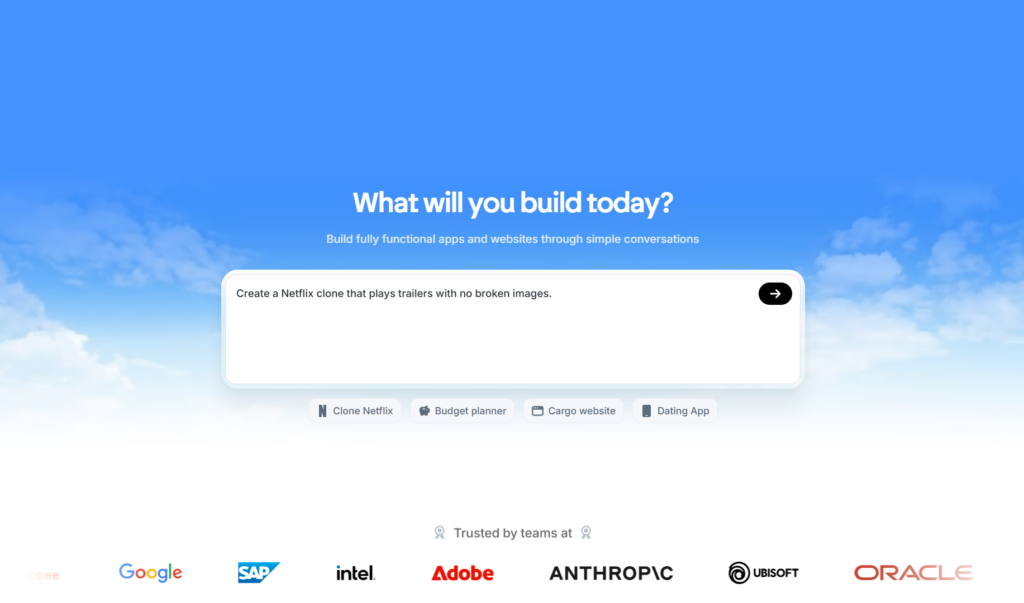
How Emergent Works
Emergent employs a sophisticated multi-agent architecture. When you describe what you want to build, you’re not just talking to a single AI model. Instead, specialized agents collaborate on your project:
- A Planner breaks down your prompt into actionable components
- A Coder writes the actual implementation
- A Tester verifies functionality and catches bugs
- A Deployment Agent handles getting your app live
This division of labor allows Emergent to tackle genuinely complex applications. We’re not talking about simple landing pages here—people are building full-stack applications with authentication, database integrations, payment processing, and custom backend logic.
The platform supports both web and mobile app development, which sets it apart from many competitors. You can build iOS and Android apps directly through the conversational interface, a capability that remains relatively rare in the vibe coding world.
The Credit System: Power Comes at a Cost
Emergent uses a credit-based pricing model, which is where things get complicated. Every action the AI agents take, planning, coding, testing, and deploying, consumes credits from your account. This usage-based approach makes sense conceptually, but it introduces unpredictability that can frustrate some users.
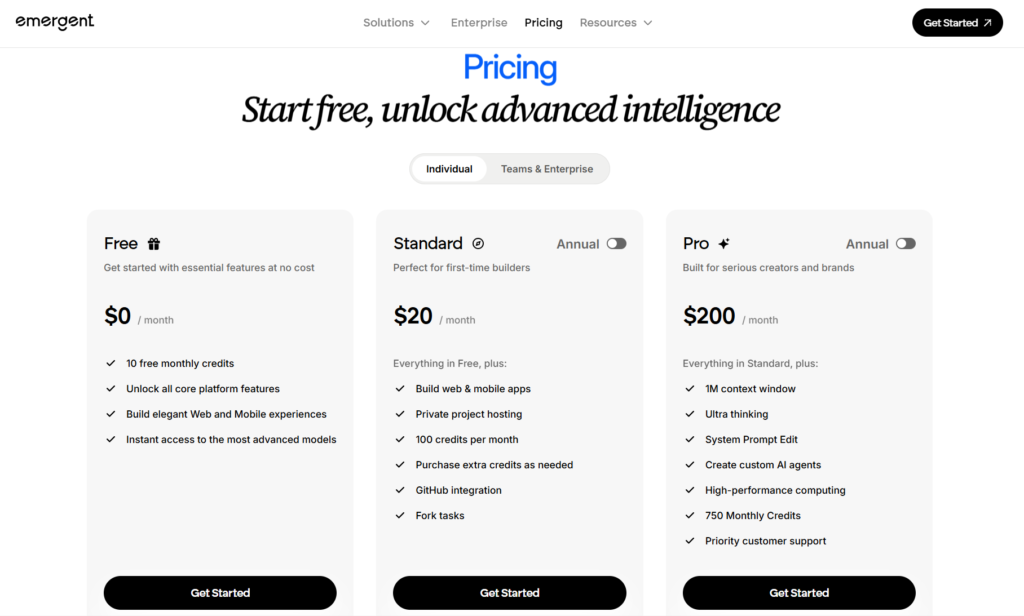
Here’s the current pricing structure:
- Free Plan: 10 credits monthly (enough to explore but not build anything substantial)
- Standard Plan: $20/month or $204/year for 100 credits
- Pro Plan: $200/month or $2,004/year for 750 credits
The challenge is that credit consumption varies wildly based on project complexity. A simple task tracker might use 30-40 credits from prompt to deployment. A full e-commerce platform could burn through 200+ credits before you’re done iterating.
The deployment cost has been particularly controversial. Deploying an app to Emergent’s hosting infrastructure costs 50 credits per month, that’s half of what you get on the Standard plan. This surprised many users who didn’t realize deployment would consume such a large portion of their monthly allocation. In contrast, most competing platforms offer free deployment.
Where Emergent Shines
Despite pricing concerns, Emergent excels in several areas:
Technical Capability: Emergent can handle legitimately complex applications. The multi-agent system allows it to manage intricate architectures, debug issues autonomously, and integrate with external services seamlessly.
Code Quality: Because Emergent is built for developers as much as non-technical users, the code it generates is clean, well-structured, and maintainable. You get full access to the codebase through GitHub integration, making it possible to inspect, modify, or export your project.
Self-Healing: When errors occur during the build process, Emergent’s agents often detect and fix them automatically without requiring manual intervention. This autonomous debugging capability saves significant time.
Integration Ecosystem: The platform supports connections to popular tools right out of the box—Google Sheets, Airtable, Notion, Slack, Stripe for payments, and more. For paid plans, you get access to even more sophisticated integrations.
Where It Falls Short
No platform is perfect, and Emergent has some notable weak points:
Transparency Issues: The biggest complaint from users centers on transparency. The pricing page doesn’t clearly explain deployment costs, and the credit consumption rate for different operations isn’t published. You discover costs through trial and error, which can be expensive.
Server Reliability: Some users report occasional server issues that disrupt workflows. While not constant, these reliability hiccups can be frustrating when you’re in the middle of active development.
Learning Curve for Non-Coders: Despite being marketed to non-technical users, Emergent’s interface and feature set feel developer-focused. The code editor opens to a VS Code instance, which isn’t exactly welcoming for someone who’s never coded before.
Credit Burn on Mistakes: When the AI makes an error or misunderstands a prompt, you still pay credits to fix it. Multiple users have reported spending significant credits just correcting AI mistakes, which feels particularly unfair.
Base44: The Wix-Backed Accessibility Champion
Base44’s story is one of the most remarkable in recent tech history. Founder Maor Shlomo built the platform as a solo side project in early 2025. Within six months, it had grown to 250,000 users and was generating $189,000 in monthly profit, all bootstrapped, with no venture funding.
In June 2025, Wix acquired Base44 for $80 million in cash, recognizing it as a strategic asset for the future of web development. That acquisition has only accelerated Base44’s growth. By late 2025, the platform had reached 2 million users and was on track to hit $50 million in annual recurring revenue.
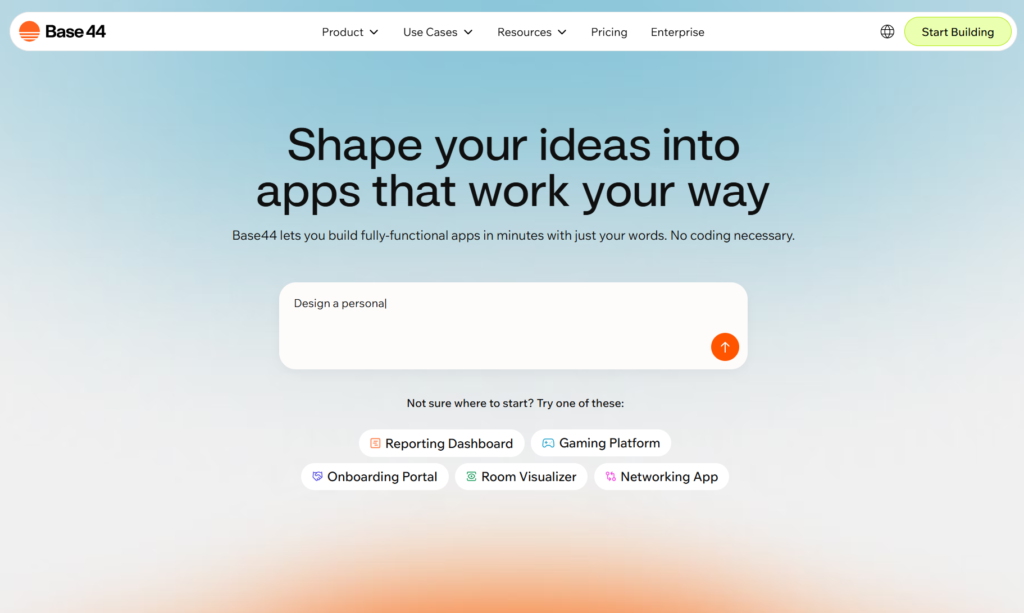
The Base44 Approach
Base44 prioritizes simplicity and accessibility above all else. The platform is designed from the ground up for people who’ve never written a line of code and never want to. You describe what you need, and Base44 builds it, no complex configuration required.
The interface is chat-based and conversational. Base44 asks clarifying questions when your prompt is ambiguous, suggests improvements, and even includes a “Discussion Mode” where you can brainstorm ideas with the AI before committing credits to actual development.
Everything is integrated. Database setup, user authentication, hosting, deployment—it’s all handled automatically. You don’t need to sign up for separate services or configure external tools. The all-in-one approach removes friction for beginners.
Pricing That Makes Sense
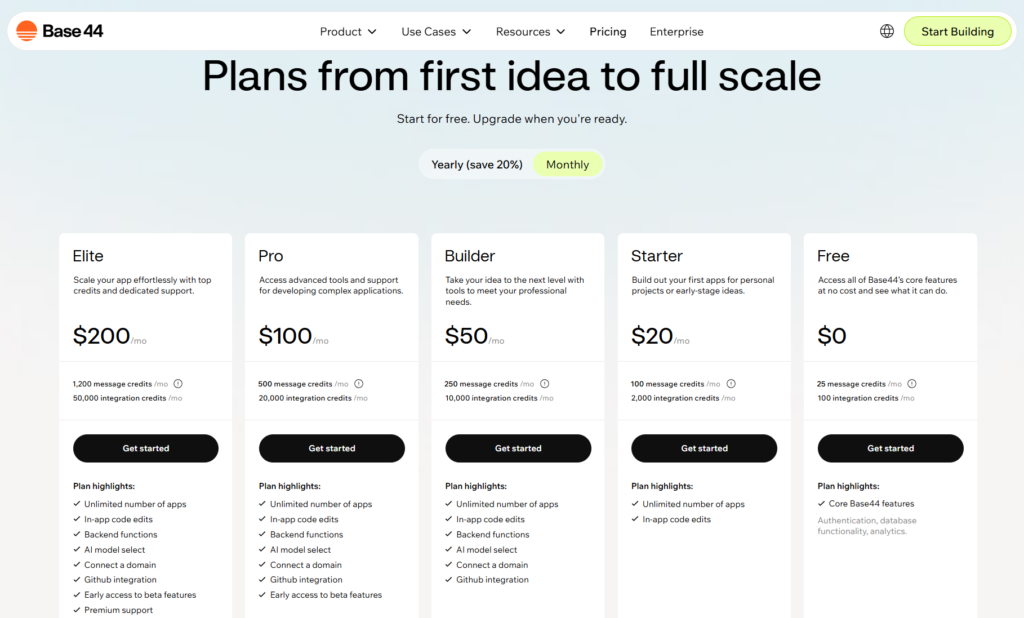
Base44’s pricing structure is significantly more transparent and predictable than Emergent’s:
- Free Plan: $0 forever, with 25 message credits monthly and 500 integration credits
- Starter Plan: $16/month annually ($20 monthly) with 100 message credits and 2,000 integration credits
- Builder Plan: $40/month annually ($50 monthly) with 250 message credits and 10,000 integration credits
- Pro Plan: $80/month annually ($100 monthly) with 500 message credits and 20,000 integration credits
- Elite Plan: $160/month annually ($200 monthly) with 1,200 message credits and 50,000 integration credits
Base44 uses two types of credits:
Message credits power your conversations with the AI—each time you send a prompt or request changes, it consumes one message credit.
Integration credits are used when your deployed app accesses integrations like AI models, file uploads, email sending, or database queries.
Crucially, deployment is completely free on all plans, including the free tier. Your apps get instant cloud hosting with SSL certificates included. This is a massive advantage over Emergent’s 50-credit monthly deployment fee.
Base44’s Strengths
Beginner-Friendly: Base44 genuinely delivers on the promise of coding without code. The interface is intuitive, the prompts are forgiving, and the results are impressively polished for the minimal effort required.
Visual Editor: Unlike Emergent, Base44 includes a visual editor that feels similar to traditional website builders. You can make pixel-level adjustments to spacing, colors, typography, and layout without writing or prompting for code changes.
Discussion Mode: This unique feature lets you explore ideas and get AI feedback before spending credits on actual development. It’s perfect for refining your concept or choosing between different implementation approaches.
Custom Domains: On paid plans, you can connect your own domain with SSL included, giving your apps a professional appearance immediately.
Faster First Drafts: Users consistently report that Base44 delivers impressively functional first drafts from single prompts. The AI seems better at inferring what you want from minimal input.
Where Base44 Has Limitations
Less Technical Depth: Base44 isn’t designed for complex, multi-layered applications. It handles MVPs, internal tools, customer portals, and productivity apps beautifully. But for enterprise-grade systems with intricate business logic, Emergent’s deeper technical capabilities might serve you better.
Limited Code Export: Unlike Emergent’s full GitHub integration, Base44‘s code export options are more restricted. On higher-tier plans you get GitHub integration, but the platform is really designed to keep you within its ecosystem.
Smaller Community: Being newer and smaller than some competitors, Base44’s community resources and third-party tutorials aren’t as extensive as Emergent’s.
Platform Lock-In: Because everything is integrated and hosted on Base44’s infrastructure, migrating away can be challenging if you outgrow the platform.
Head-to-Head Comparison: The Details That Matter
Speed to First Working Prototype
Winner: Base44
Base44 consistently delivers faster first drafts. Users report getting functional MVPs from a single well-written prompt, often within 5-10 minutes. Emergent’s multi-agent approach is more thorough but slower, typically taking 15-30 minutes for initial builds.
Technical Complexity Ceiling
Winner: Emergent.sh
For genuinely complex applications—think multi-tenant SaaS products, advanced data processing workflows, or apps with sophisticated business logic—Emergent handles the complexity better. Its multi-agent architecture and self-healing capabilities make it more resilient when projects get complicated.
Cost Transparency and Predictability
Winner: Base44
This isn’t even close. Base44’s pricing is clear, deployment is free, and you can easily predict monthly costs based on usage. Emergent’s credit system creates too much uncertainty, and the deployment fees feel like hidden costs.
User Experience for Non-Developers
Winner: Base44
Base44 was built specifically for people without coding experience, and it shows. The interface is welcoming, the visual editor is helpful, and Discussion Mode reduces the anxiety of committing credits to development. Emergent feels more developer-focused throughout.
Code Quality and Exportability
Winner: Emergent.sh
Emergent generates cleaner, more maintainable code and offers seamless GitHub integration. If you care about owning your codebase or eventually transitioning to traditional development, Emergent gives you better options.
Integration Ecosystem
Tie (with different strengths)
Both platforms offer robust integration capabilities. Emergent supports more developer-focused integrations and external APIs. Base44 bundles common integrations (email, SMS, AI models) into its credit system more seamlessly for non-technical users.
Mobile App Development
Winner: Emergent.sh
Emergent supports native mobile app development for iOS and Android. Base44 focuses primarily on web applications, though those apps work on mobile browsers.
Reliability and Stability
Winner: Base44
User reports suggest Base44 has fewer server issues and agent failures. Emergent users more frequently mention builds that crash, loop indefinitely, or lose progress.
Real-World Use Cases: Which Tool for Which Job?
Choose Emergent.sh If You’re:
- Building technically complex applications that require sophisticated backend logic, advanced integrations, or multi-step data processing workflows.
- Comfortable with some technical concepts or have a developer on your team who can collaborate with the AI agents.
- Planning to eventually customize or export your code and want GitHub integration from day one.
- Developing mobile apps for iOS or Android platforms.
- Building for enterprise clients who need robust, scalable architectures.
Choose Base44 If You’re:
- A non-technical founder validating a startup idea and need to build an MVP quickly.
- Creating internal business tools like CRMs, project trackers, or employee portals.
- Building client portals for service businesses, membership sites, or customer dashboards.
- Launching a simple e-commerce store or booking system.
- Working with limited budgets and needing predictable, transparent pricing.
- Prioritizing speed to market over technical sophistication.
The Acquisition Factor: What Wix’s Backing Means for Base44
Base44’s $80 million acquisition by Wix in June 2025 represents a significant vote of confidence in the platform’s approach. More importantly, it brings tangible benefits:
Resources for Scale: Wix is investing heavily in Base44’s infrastructure and marketing. The platform grew from 250,000 users at acquisition to 2 million users by late 2025, a sevenfold increase in just five months.
Financial Stability: Unlike many startups that struggle with funding and survival, Base44 now has the backing of a profitable, publicly traded company. This reduces the risk that the platform will suddenly shut down or pivot direction.
Integration Opportunities: Wix is integrating Base44 into its broader ecosystem while maintaining it as a distinct product. This could mean better connections to Wix’s design tools, hosting infrastructure, and marketing features.
Talent and Expertise: Access to Wix’s engineering teams, AI researchers, and product designers should accelerate Base44’s development roadmap.
However, acquisitions come with risks too. Some users worry that Wix might eventually absorb Base44 entirely, changing the product’s direction or pricing. So far, Wix has committed to maintaining Base44’s independence, but it’s worth watching.
Emergent’s Y Combinator Pedigree and Rapid Growth
Emergent’s backing from Y Combinator, one of the most prestigious startup accelerators in the world, validates its technical approach and growth potential. The platform’s reported trajectory to $10 million ARR in just two months is genuinely impressive.
The Y Combinator connection brings several advantages:
Credibility: YC’s seal of approval attracts serious users, investors, and potential partners.
Network Effects: Access to YC’s alumni network means potential integrations, partnerships, and growth opportunities.
Product Focus: YC’s mentorship emphasizes product-market fit and rapid iteration, which shows in Emergent’s aggressive feature development.
The challenge is that venture-backed companies face pressure to grow quickly and eventually deliver returns to investors. This can sometimes lead to decisions that prioritize growth over user experience, something worth monitoring as Emergent matures.
The Verdict: Which Platform Should You Actually Use?
Here’s the truth: there’s no universally “better” platform. The right choice depends entirely on your specific situation.
If you’re a non-technical founder who needs to validate a business idea quickly without learning to code, Base44 is the obvious choice. The transparent pricing, free deployment, beginner-friendly interface, and rapid prototyping capabilities make it perfect for MVPs and early-stage validation.
If you’re building something technically sophisticated, a complex SaaS product, an app with intricate business logic, or mobile applications, Emergent’s deeper technical capabilities justify the steeper learning curve and less predictable costs.
If budget predictability matters, Base44 wins. You’ll know exactly what you’re paying each month, and deployment won’t eat half your credits.
If code ownership and exportability are important, Emergent’s GitHub integration and cleaner code output make it the better long-term choice.
What About the Competition?
It’s worth noting that Emergent and Base44 aren’t operating in a vacuum. The vibe coding space also includes:
Bolt.new: Great for developers who want code control with AI assistance
Lovable: Focused on simple website and landing page creation
Replit: Cloud-based IDE with AI features for hands-on coders
Cursor: AI-powered code editor for professional developers
v0 by Vercel: React component generation for frontend developers
Each has its niche, but Emergent and Base44 have emerged as the most complete platforms for building full-stack applications through conversation alone.
The Future of Vibe Coding in 2026 and Beyond
Both platforms represent the cutting edge of a fundamental shift in how software gets built. We’re moving from a world where coding ability is the bottleneck to one where clear thinking and problem articulation become the key skills.
This democratization of software development has enormous implications:
Reduced development costs for businesses of all sizes Faster time to market for new ideas and products Lower barriers to entry for entrepreneurs without technical backgrounds New opportunities for designers, product managers, and domain experts to build directly
As AI models continue improving, these platforms will only get more capable. The applications being built today with vibe coding would have required teams of developers and months of work just a few years ago.
Practical Recommendations for Getting Started
Regardless of which platform you choose, here are some tips to maximize your success:
Start with crystal-clear prompts: The quality of your output depends heavily on the quality of your input. Be specific about what you want, including details about functionality, design preferences, and user flows.
Iterate in small steps: Don’t try to build your entire application in one massive prompt. Break it into logical components and build iteratively.
Use discussion features: Both platforms offer ways to clarify and refine before committing to development. Take advantage of this to avoid wasting credits.
Test thoroughly: AI-generated applications can have subtle bugs that don’t appear in simple testing. Deploy to a test environment and thoroughly verify all functionality before going live.
Budget for iteration: Your first version won’t be perfect. Set aside budget and credits for refinements, bug fixes, and feature additions.
Join the communities: Both platforms have active user communities where you can learn best practices, troubleshoot issues, and see what others are building.
Final Thoughts: The Tool Matters Less Than the Builder
After spending time with both platforms and researching hundreds of user experiences, here’s what I’ve concluded: the platform you choose matters less than whether you’re willing to learn its particular approach and work within its strengths.
Base44 excels at making software development accessible to everyone. It removes barriers, simplifies complexity, and gets you from idea to working product faster than almost any alternative. If you’re new to building apps or need speed above all else, it’s the right choice.
Emergent delivers more power and flexibility for complex projects. It handles sophisticated architectures, generates higher-quality code, and gives you more control over the final product. If you have technical requirements that simple builders can’t meet, Emergent justifies its steeper learning curve.
Both platforms are actively improving. Base44 is using Wix’s resources to scale rapidly and add features. Emergent is refining its user experience and addressing transparency concerns. The gap between them is likely to narrow as both mature.
The vibe coding revolution is just beginning. Whether you choose Emergent.sh, Base44, or another platform entirely, you’re participating in a fundamental transformation of how software gets built. That’s exciting regardless of which tool is in your hands.
The real question isn’t “which platform is better?” It’s “what will you build now that the barriers are gone?”