
Some tools help you build a website. Others help you build an experience. Framer and Ceros sit close enough together that marketers and designers often compare them, but they were built for different jobs, different teams, and very different budgets.
Framer is a general-purpose website builder. You can use it to create a full website with pages, a blog, a CMS, localization, and hosting, then publish it on your own domain. Ceros is an interactive content platform. Teams use it to produce eye-catching, animated pieces such as microsites, digital reports, interactive landing pages, lookbooks, and sales content, usually as part of a marketing campaign.
Choose Framer if you need a complete, fast, affordable website that you can update and grow over time. Choose Ceros if you are a mid-sized or enterprise marketing team that needs to produce high-impact interactive content at scale, and you have the budget for a specialized platform. For most small businesses, startups, and freelancers, Framer is the more practical fit. For brands that publish interactive campaigns again and again, Ceros can justify its premium.
This comparison covers what each tool does, how they differ in design, interactivity, SEO, content management, analytics, collaboration, and pricing, and which type of team should pick which.
Framer vs. Ceros: Quick Comparison
| Category | Framer | Ceros |
|---|---|---|
| What it is | A no-code website builder with a built-in CMS and hosting | A no-code platform for interactive, animated marketing content |
| Best for | Startups, SaaS, agencies, portfolios, marketing websites | Mid-market and enterprise marketing and design teams |
| Typical output | Full websites, landing pages, blogs, portfolios | Interactive microsites, reports, campaign pages, sales content |
| Editor style | Design canvas with stacks, components, and breakpoints | Canvas editor with animation tools that feel familiar to Adobe users |
| Animation and interactivity | Strong, including scroll effects and interactive components | Core strength, with rich animation and interactive elements |
| Built-in CMS and blogging | Yes | Not a website CMS; focused on content assets and libraries |
| Localization | Built in | Offered for content; check current capabilities |
| Team size it suits | Individuals to mid-sized teams | Mid-market and enterprise teams |
| Free plan | Yes | No public free plan; free trial and demos are common |
| Pricing | Roughly $10 to $30 per month per site | Quote-based, typically aimed at larger budgets |
| Time to learn | Moderate | Moderate, with a design-friendly interface |
What Is Framer?
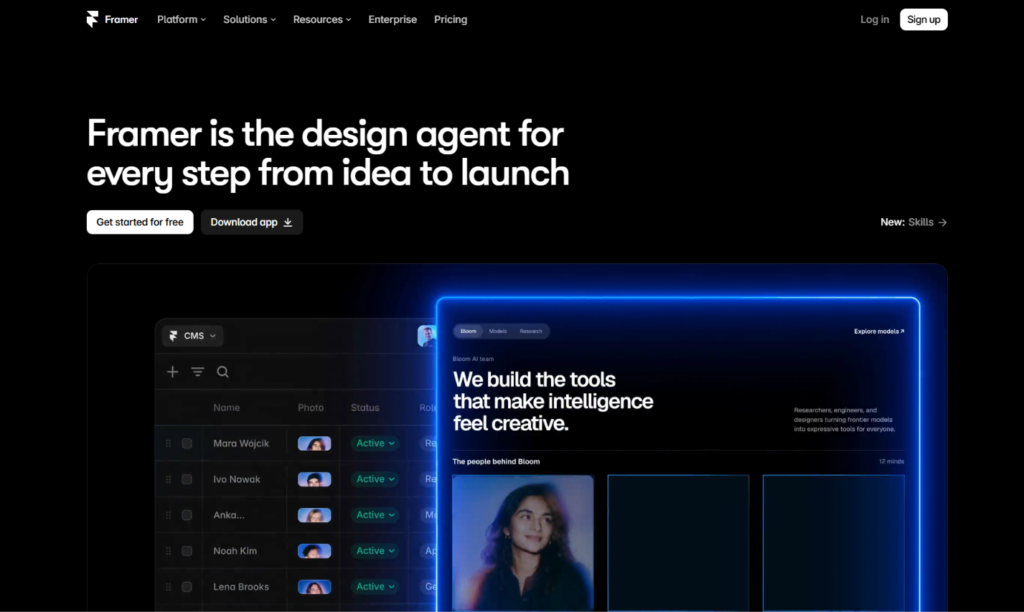
Framer is a visual website builder with a design-tool feel. If you have used Figma or a similar program, the canvas, frames, stacks, and components will look familiar. You design pages, add animations and interactions, connect a CMS, and publish to a live site without leaving the editor. Hosting, security certificates, and delivery are handled for you.
Its strengths are design control, a built-in toolkit for marketing teams (CMS, localization, redirects, A/B testing), and flexibility for developers who want to add custom code or React components. Framer also includes AI generation, which can produce a first draft of a page or site for you to refine.
Because it replaces a stack of separate tools, Framer is a practical choice for teams that want one place to design, publish, and maintain a website.
What Is Ceros?
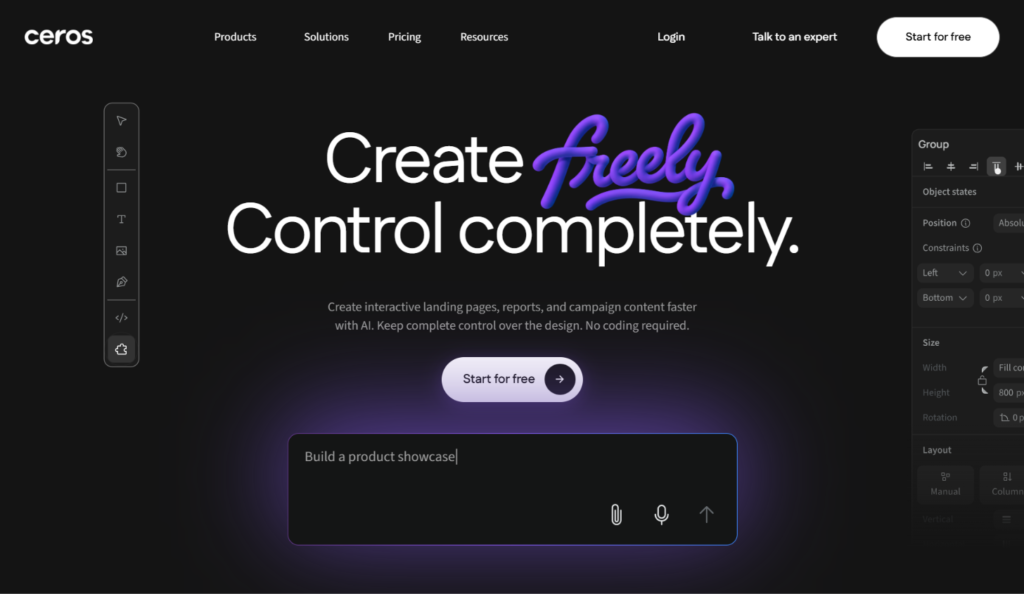
Ceros is a no-code content creation platform built for marketing and design teams. It lets them create interactive, animated web experiences without writing code, and it is described by its own team as a place to build everything from campaign landing pages and microsites to interactive sales proposals, investor reports, and product demos.
The editor works like a creative canvas. Reviewers often say that people who know Adobe tools feel at home quickly, particularly when working with animation. Ceros also includes templates, content libraries, preview links, collaboration features, integrations with marketing tools, and performance analytics that show how audiences engage.
Ceros positions itself for mid-market and enterprise teams that have in-house design resources and need to produce and optimize interactive content across many campaigns. It is not a general website builder, and it is not designed to replace your company website, blog, or CMS.
The Core Difference: A Website vs. an Experience
Here is the simplest way to think about it. Framer builds the home. Ceros builds the showpieces you put on display.
Your company website needs a navigation menu, a blog, a pricing page, a contact form, good search visibility, and easy updates. That is Framer’s territory. Your quarterly report, product launch microsite, or annual trends campaign needs motion, storytelling, and an impressive first impression. That is where Ceros shines.
Many organizations use both kinds of tools. A brand might run its main site on a builder like Framer while producing campaign experiences in a platform like Ceros. The question is not which tool is more impressive. It is which problem you are solving.
Ease of Use and Learning Curve
Framer asks you to understand a few design concepts, such as stacks, breakpoints, and component variants. Designers and marketers who have used modern design tools usually pick them up quickly. Beginners may need a few hours with tutorials and templates, and the community and documentation make that easier.
Ceros gives marketers and designers a familiar creative canvas with layers, a timeline-style animation approach, and visual controls. Users often point to its approachable animation tools. The platform is designed for teams that make interactive content regularly, and onboarding and support are part of the offering. At the same time, with so many creative options, quality still depends on design skill.
Verdict: Both are accessible without code. Framer is easier for general website work. Ceros is easier for designers who want to build interactive, animated content.
Design and Interactivity
Both tools go well beyond template-based design.
Framer gives you precise control over layout, typography, and spacing, along with strong animation: scroll effects, hover states, page transitions, and interactive components. The result is a polished site with a consistent design system that scales across many pages.
Ceros leans harder into interactivity and storytelling. Its focus is on creating rich, animated experiences where visitors click, scroll, and explore. For campaign pieces that need to feel more like a product demo or a digital magazine than a standard web page, this focus is valuable.
The trade-off is scope. Interactive experiences are often built as standalone pieces, so keeping a consistent, reusable design system across a full website is not their main goal. Framer is built for that.
Verdict: Framer for a consistent, scalable website. Ceros for standout, interactive campaign experiences.
Content Management and Publishing
Framer includes a built-in CMS. You can create collections for blog posts, case studies, team members, or resources, then design templates that display each entry. Marketers can update content without touching layout, and new entries become new pages automatically.
Ceros includes content management tools, libraries, and templates, but they are designed to manage interactive content assets, not to power a full website with a blog and dynamic pages. Experiences are typically published to their own links or embedded into other pages, so they often sit alongside a main website instead of replacing it.
Verdict: Framer for an ongoing website with regular publishing. Ceros for individual interactive pieces.
SEO and Performance
Google does not favor a site because of the tool that built it. It rewards crawlable, fast, mobile-friendly pages with helpful and original content. That principle applies to both platforms.
Framer gives you direct control over titles, meta descriptions, URLs, headings, alt text, redirects, sitemaps, and structured data through custom code. Pages are built on a lean foundation, which helps with Core Web Vitals, and marketers can manage SEO themselves.
With any interactive, animation-heavy platform, including Ceros, you should pay close attention to how content renders for search engines and how quickly it loads on mobile devices. Heavy media and complex interactions can slow pages down, and text that appears only inside animated elements may be harder for crawlers to understand. If search traffic matters for a particular piece, place key information in plain, crawlable text, compress media, and test the final page with Google PageSpeed Insights and Search Console before you launch.
Verdict: Framer for SEO-driven websites. Ceros for campaign content where engagement and storytelling matter more than organic traffic.
Analytics and Measurement
Framer works with standard analytics tools and offers its own built-in options, and you can connect Google Analytics and other trackers through settings or custom code. A/B testing helps marketers improve pages over time.
Ceros puts engagement measurement at the center of its pitch. It provides performance metrics that show how audiences interact with experiences, helping teams understand which elements hold attention and which campaigns drive results. For a team that must prove the value of interactive content to stakeholders, that reporting matters.
Verdict: Ceros for engagement reporting on interactive content. Framer for general website analytics and testing.
Collaboration and Team Workflows
Framer supports real-time collaboration, comments, and fast publishing. Designers, marketers, and developers can work in the same project, and editor seats are priced separately from site plans.
Ceros is built for teams that produce content regularly. It includes shared libraries, templates, and review workflows that help larger marketing and design departments stay consistent. Integrations with marketing platforms help move experiences into the wider campaign process.
Verdict: Framer for lean, fast-moving teams. Ceros for larger teams producing many interactive assets.
E-Commerce and Advanced Functionality
Neither is a full e-commerce platform. Framer can connect to services like Shopify, Stripe, or Lemon Squeezy for a small number of products, and Ceros can power interactive product showcases and lookbooks that link to a store. Neither handles inventory, carts, or fulfillment natively. If you want to run a real online shop, look at Shopify, Wix, or a similar platform. Our Framer vs. Wix comparison shows where each builder fits.
Verdict: Neither is the right primary platform for an online store.
Pricing: Framer vs. Ceros
Pricing shows the sharpest difference between these two tools, so read this section carefully. Always confirm current details on each company’s website.
Framer pricing
- Free: A framer.website subdomain with a Framer badge.
- Basic: Around $10 per month per site, billed annually.
- Pro: Around $30 per month per site, billed annually.
- Enterprise: Custom pricing.
Framer charges per site, and extra editors are billed separately. Monthly billing costs more than annual billing.
Ceros pricing
Ceros does not publish a simple price list. Pricing is quote-based and depends on your team size, features, and needs, and the company offers demos and free trials so teams can evaluate it. Independent software directories describe it as a product for mid-market and enterprise teams, which usually means budgets measured in thousands of dollars a year at the least. Get a quote directly from Ceros to see what your own team would pay.
What the price difference means
Framer is built for anyone from a solo freelancer to a growing company, and you can start for free. Ceros is built for organizations that treat interactive content as a core marketing investment and have the headcount and budget to use a specialized platform.
Paying more makes sense when interactive campaigns drive pipeline and you produce them often. It does not make sense for a team that needs a standard website.
Verdict: Framer for accessibility and value. Ceros for teams with dedicated budgets and a steady stream of interactive projects.
Limitations to Know Before You Choose
Framer limitations
- No native e-commerce
- Interactive storytelling is possible but not its sole focus
- No code export, so your site stays on Framer’s platform
- Editors are billed separately
Ceros limitations
- Not a full website builder or CMS
- Quote-based pricing aimed at larger organizations
- No public free plan
- Some reviewers mention gaps in areas such as mobile integration and automated content updates
- Heavy interactive pages need careful testing for speed and search visibility
Can You Use Framer and Ceros Together?
Yes, and many teams do something similar with other tools. You might run your main website on Framer and publish Ceros experiences as campaign pages, interactive reports, or embedded features. Link to them from your site, use consistent branding, and track both in the same analytics setup.
If you do this, think about SEO. A standalone experience on a separate address will not automatically pass the authority of your main domain. Decide in advance whether a piece is meant to rank in search or to engage visitors that you send there through email, ads, or social media.
Who Should Choose Framer?
Framer is the better choice if you:
- Need a full website, blog, or portfolio
- Want design, CMS, and hosting in one place
- Are a startup, freelancer, agency, or small team
- Care about SEO and want direct control over it
- Have a limited budget and want to start for free
- Need to update the site quickly without developers
Who Should Choose Ceros?
Ceros is the better choice if you:
- Lead marketing or design for a mid-sized or enterprise company
- Produce interactive campaigns, reports, or microsites regularly
- Want to create animated, immersive content without waiting for developers
- Need engagement analytics for interactive pieces
- Have in-house designers who can use a creative canvas well
- Have the budget for a specialized platform
Real-World Scenarios
A SaaS startup building its company website. Framer. A CMS, SEO controls, and affordable pricing matter more than interactive storytelling.
A global brand launching an annual trends report. Ceros. An animated, interactive report with engagement analytics fits the platform well.
A freelance designer building a portfolio. Framer. Design control and low cost make it a natural fit.
A B2B marketing team creating interactive sales proposals and product demos. Ceros. These formats are a core use case.
A small agency that needs client websites. Framer. Collaboration, speed, and easy handoff matter most.
A company that wants both a modern website and a showpiece campaign. Framer for the website and Ceros for the campaign, if the budget allows.
How to Decide: A Short Checklist
- Do you need a full website with a blog and CMS? If yes, choose Framer.
- Do you produce interactive campaigns several times a year? If yes, consider Ceros.
- What is your budget? A limited or flexible budget favors Framer. A dedicated enterprise budget makes Ceros realistic.
- How important is search traffic? If it is a priority, lean Framer.
- Who will build and maintain it? Small teams favor Framer. Teams with in-house designers and a steady content pipeline can get more from Ceros.
Try Framer on its free plan, and request a Ceros demo or trial. Building a small piece in each will tell you more than any feature list.
Frequently Asked Questions
Is Ceros a website builder?
Not in the traditional sense. Ceros is an interactive content platform for creating animated, engaging experiences such as microsites, reports, and campaign pages. It is not designed to replace a full website with a blog and CMS.
Is Framer better than Ceros?
It depends on the job. Framer is better for building and running a complete website. Ceros is better for producing interactive, high-impact marketing content at scale.
Who uses Ceros?
Ceros is aimed at mid-market and enterprise marketing and design teams that create interactive content across campaigns.
Does Ceros require coding?
No. Ceros is a no-code platform with a visual editor and animation tools.
How much does Ceros cost?
Ceros uses quote-based pricing, so there is no public price list. Contact the company for a quote and ask about trials or demos.
Does Framer have a free plan?
Yes. Framer has a free plan that lets you build and publish on a framer.website subdomain. Paid plans add a custom domain and higher limits.
Is Framer good for interactive content?
Yes, to a point. Framer supports scroll animations, hover effects, and interactive components. Ceros goes further into storytelling and standalone interactive experiences.
Can I use Ceros for SEO?
You can publish content with Ceros, but interactive, animation-heavy pages need extra care. Keep key text crawlable, optimize media, and test your pages before launch.
Can I use Framer and Ceros together?
Yes. Many teams pair a main website with separate interactive campaign experiences. Plan your branding, linking, and analytics so the two work together.
Which is easier to learn?
Both are no-code and visual. Framer is easier for general web design. Ceros feels natural for designers who are comfortable with creative and animation tools.
What are the best alternatives to Framer and Ceros?
Webflow, Wix, and Squarespace are common alternatives to Framer. For interactive content, teams also look at tools such as Visme, Mailchimp’s landing page tools, and custom-built experiences. Pick based on whether you need a website or a showpiece.
Final Verdict: Framer or Ceros?
Framer and Ceros are strong tools, but they are not rivals in the usual sense.
Choose Framer if you need a complete, flexible website with a CMS, SEO controls, collaboration, and an accessible price. It is the practical choice for most startups, agencies, small businesses, and marketing teams.
Choose Ceros if you lead a larger marketing or design team and your main goal is to produce interactive, animated campaign content at scale, backed by analytics and the budget to match.
If you are still unsure, start with the website. A good site is the base that every campaign points back to. Once your content strategy matures and interactive pieces become a regular part of your marketing, a platform like Ceros becomes easier to justify. Features and pricing change, so confirm current details with each company before you commit.
