
If you’re searching for “Spocket vs Shopify,” you’re probably trying to figure out which platform you need to start your online business.
Here’s the truth that most articles won’t tell you upfront: this isn’t actually an either-or decision.
Shopify and Spocket serve completely different purposes, and understanding this difference will save you from making costly mistakes. Think of it this way: Shopify is the house where you live, while Spocket is the furniture company that delivers products to fill that house.
In this comprehensive guide, I’ll break down exactly what each platform does, how much they cost, and most importantly, which one (or both) you actually need for your ecommerce business in 2026.
What Exactly Is Shopify?
Shopify is an all-in-one ecommerce platform that powers over 5.8 million online stores worldwide. It’s the foundation where you build your entire online store from scratch.
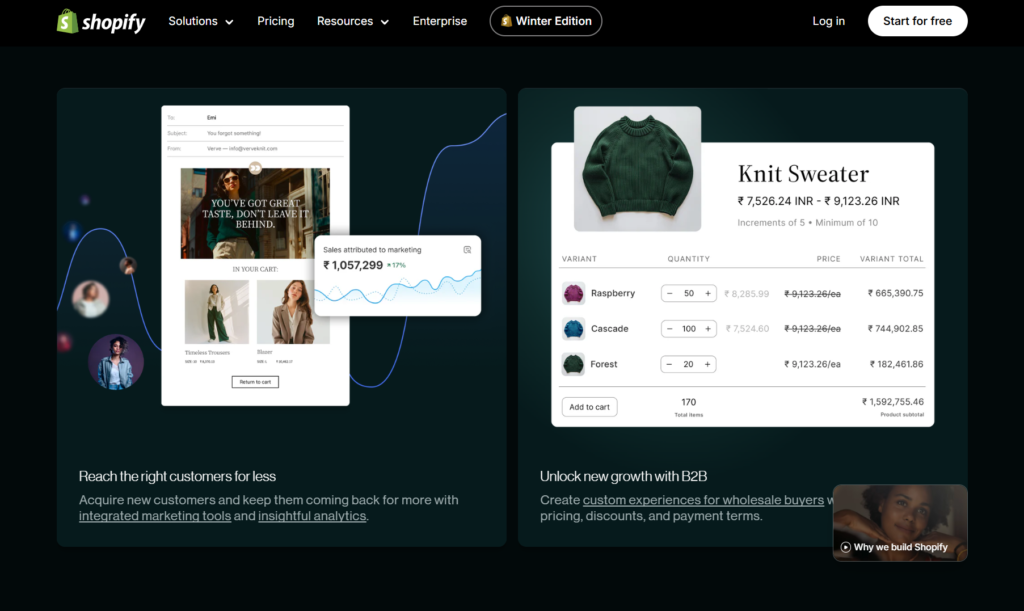
When you use Shopify, you get everything needed to run an e-commerce business: website hosting, shopping cart functionality, payment processing, inventory management, and marketing tools. Major brands like Gymshark, Kylie Cosmetics, and Heinz use Shopify to manage their direct-to-consumer sales.
The platform handles the technical heavy lifting so you don’t need coding skills. You simply choose a theme, customize your store’s appearance, add products, and start selling. Shopify currently captures about 30% of the US ecommerce market, making it the most popular ecommerce solution for businesses of all sizes.
Key Shopify Features
Store Builder & Design Shopify offers over 900 customizable themes with mobile-friendly designs and AI-powered customization through Shopify Magic. The drag-and-drop editor makes it easy to create a professional-looking store without touching code.
Payment Processing Shopify Payments is built directly into the platform, supporting all major credit cards and digital wallets like Apple Pay and Shop Pay. The platform boasts the internet’s best-converting checkout, with 15% better conversion rates than competitors.
Multi-Channel Selling Sell everywhere your customers are: your website, Instagram, TikTok, Facebook, Amazon, eBay, and physical retail locations. Everything syncs through one centralized dashboard.
AI-Powered Tools Shopify Sidekick acts as your 24/7 business assistant, helping with everything from product descriptions to business strategy. AI features help automate routine tasks and provide data-driven insights.
Marketing & Analytics Built-in email marketing, abandoned cart recovery, SEO optimization tools, and comprehensive analytics help you grow your business. Advanced plans include detailed reports on customer behavior and sales trends.
Point of Sale (POS) Shopify POS lets you sell in person while keeping inventory synchronized with your online store. Perfect for businesses running both physical and digital operations.
What Exactly Is Spocket?
Spocket is a dropshipping supplier platform that connects e-commerce store owners with vetted suppliers, primarily from the US and Europe.
It’s not a standalone ecommerce platform; it’s an app that integrates with existing stores on Shopify, WooCommerce, BigCommerce, and other platforms.

The platform specializes in solving one of dropshipping’s biggest challenges: finding reliable suppliers who ship quickly. Over 60,000 entrepreneurs use Spocket to source products without holding inventory or managing fulfillment.
Here’s how it works: You browse Spocket’s curated product catalog, import items you want to sell, and when customers place orders on your store, Spocket automatically forwards those orders to suppliers who ship directly to your customers.
Key Spocket Features
US & EU Supplier Network Unlike platforms that rely heavily on overseas suppliers, over 80% of Spocket’s suppliers are based in the United States and Europe. This means shipping times of 2-7 days instead of 3-4 weeks, which dramatically improves customer satisfaction.
Automated Order Fulfillment When a customer buys from your store, Spocket automatically processes the order with your supplier. No manual forwarding, no copying and pasting order details, it all happens seamlessly in the background.
Product Sourcing Tools Browse thousands of pre-vetted products across categories like fashion, beauty, home decor, electronics, and pet supplies. The platform shows real-time inventory levels, pricing, and shipping times.
Branded Invoicing Higher-tier plans let you customize invoices with your logo and branding, creating a cohesive customer experience even though you’re not handling fulfillment.
Inventory Sync Spocket automatically monitors stock levels and price changes from suppliers, updating your store in real-time to prevent overselling.
Sample Ordering Test products before listing them by ordering samples directly through the platform. This ensures quality and lets you photograph items for marketing.
AI-Driven Tools Spocket has introduced AI features for product research, trend identification, and automated dropshipping operations to help sellers scale faster.
The Real Comparison: What You Actually Need
Now that you understand what each platform does, let’s address the core question: which one do you need?
The answer depends on your business model:
Scenario 1: Starting an Online Store (Any Type)
You need: Shopify
If you’re selling any products online, whether dropshipping, holding inventory, print-on-demand, or digital products, you need an e-commerce platform like Shopify. This is non-negotiable. Shopify provides the storefront, checkout, payment processing, and all the infrastructure for running an online business.
Shopify works for traditional inventory-based businesses, service-based businesses, digital product sellers, and yes, dropshippers too.
Scenario 2: Starting a Dropshipping Business
You need: Shopify + Spocket (or similar dropshipping app)
For dropshipping, you need both platforms working together. Shopify provides your online store, while Spocket provides the products and handles fulfillment. They’re complementary tools, not competing options.
Without Shopify (or another e-commerce platform), you have nowhere to showcase products and accept payments. Without Spocket (or another supplier source), you have no products to sell and no fulfillment solution.
Scenario 3: Traditional Retail with Your Own Inventory
You need: Shopify only
If you’re manufacturing products, buying wholesale inventory, or running a traditional retail operation, you only need Shopify. Spocket is specifically for dropshipping, so it wouldn’t benefit your business model.
Shopify Pricing Breakdown
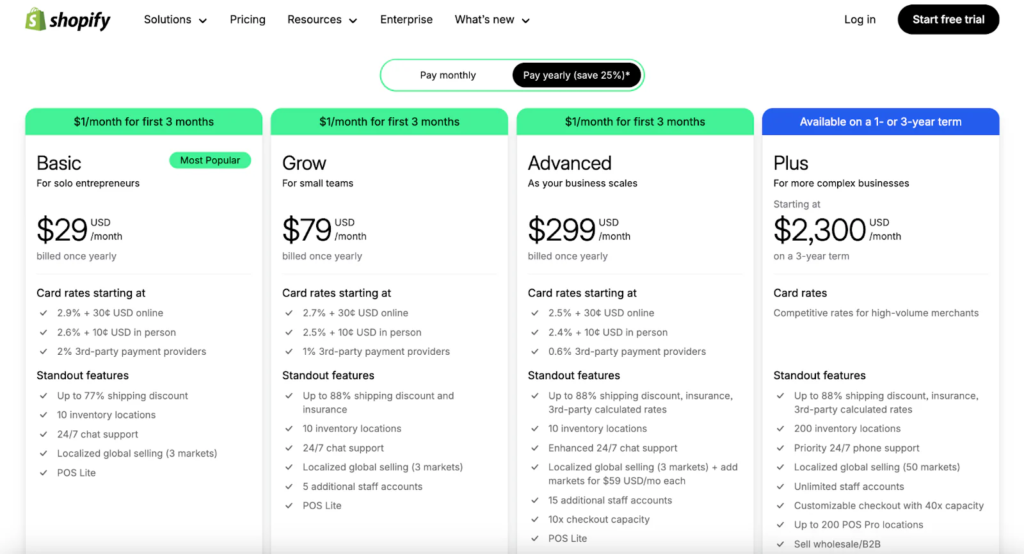
Understanding Shopify’s actual costs helps you budget accurately. The platform uses a subscription model with additional transaction fees.
Shopify Starter Plan: $5/month
The Starter plan is ultra-basic, it’s essentially just a checkout link generator. You don’t get a full online store, just the ability to sell through social media and messaging apps.
Best for: Content creators and influencers selling a few products through Instagram or TikTok bio links.
Limitations: No actual storefront, no SEO capabilities, no analytics, and extremely limited customization.
Shopify Basic Plan: $29/month (annual) or $39/month (monthly)
This is where most new store owners start. You get a complete online store with all essential features.
What’s included:
- Unlimited products and bandwidth
- Professional themes and customization
- 24/7 AI-powered support
- Abandoned cart recovery
- Basic reporting and analytics
- 2 staff accounts
- Sell on social media and marketplaces
Transaction fees: 2.9% + 30¢ per transaction with Shopify Payments; 2% additional fee if using third-party payment gateways.
Best for: Solo entrepreneurs and small businesses launching their first online store.
Shopify Grow Plan: $79/month (annual) or $105/month (monthly)
The Grow plan (formerly called “Shopify”) provides more powerful features for expanding businesses.
What’s included:
- Everything in Basic
- 5 staff accounts
- Professional reports
- Lower transaction fees
- Advanced automation capabilities
- Better international selling features
Transaction fees: 2.7% + 30¢ per transaction with Shopify Payments; 1% additional fee for third-party gateways.
Best for: Growing businesses doing $30,000+ monthly revenue with a small team.
Shopify Advanced Plan: $299/month (annual) or $399/month (monthly)
The Advanced plan is designed for established businesses with high sales volume.
What’s included:
- Everything in Grow
- 15 staff accounts
- Advanced reporting with custom reports
- Third-party calculated shipping rates
- Lowest transaction fees
- Enhanced live chat support
Transaction fees: 2.5% + 30¢ per transaction with Shopify Payments; 0.6% additional fee for third-party gateways.
Best for: Large-scale operations managing significant inventory and sales volume across multiple channels.
Shopify Plus: Starting at $2,300/month
Shopify Plus is the enterprise solution for high-volume businesses and global brands.
What’s included:
- Dedicated account management
- Unlimited staff accounts
- Advanced customization capabilities
- Headless commerce support
- Priority support
- Custom checkout experiences
Best for: Enterprise-level businesses doing $1M+ in annual revenue.
Real Cost Considerations
Your actual Shopify costs extend beyond the base subscription:
Apps: Most stores spend $50-150/month on apps for reviews, email marketing, SEO, upsells, and other functionality.
Themes: Free themes are available, but premium themes cost $150-350 one-time purchase.
Transaction Fees: These add up quickly. On the Basic plan, a $100 sale costs you $3.20 in processing fees using Shopify Payments, or $5.20 if using PayPal or Stripe.
Marketing: Budget separately for advertising, influencer partnerships, and promotional campaigns.
A realistic monthly budget for a growing Shopify store on the Basic plan: $150-300 including apps and essential services.
Spocket Pricing Breakdown
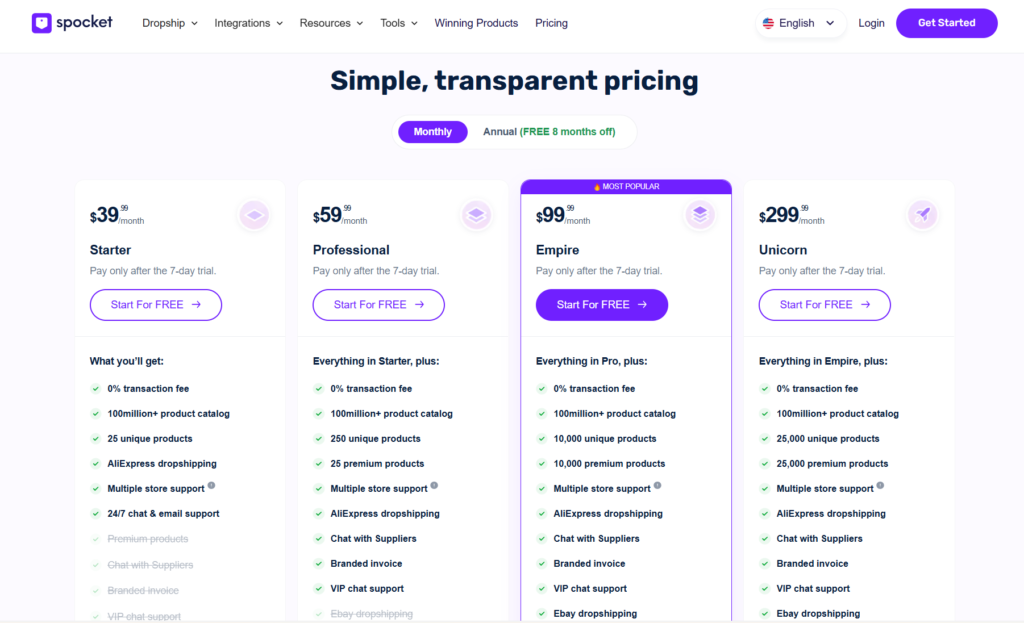
Spocket’s pricing is straightforward, with four tiers based on the number of products you want to dropship.
Free Trial: 7 Days
Every paid plan includes a 7-day free trial so you can test the platform before committing financially.
Starter Plan: $39.99/month
What’s included:
- 25 unique products from Spocket’s catalog
- Email support
- AliScraper Chrome Extension for AliExpress importing
- Basic product filtering
Limitations: No branded invoicing, limited premium product access, no priority support.
Best for: Testing the dropshipping model with a small product selection.
Pro Plan: $59.99/month or $24/month (annual)
This is Spocket’s most popular plan for good reason—it hits the sweet spot between features and affordability.
What’s included:
- 250 unique products
- 25 premium products (vetted high-quality items)
- Branded invoicing with your logo
- Chat support
- Winning products selection
- Priority supplier access
Best for: Serious dropshippers building a real brand with quality products and professional customer experience.
Empire Plan: $99.99/month or $57/month (annual)
The Empire plan is designed for established dropshipping businesses scaling their operations.
What’s included:
- 10,000 unique products
- 250 premium products
- Everything in Pro plan
- Priority processing
- Bulk checkout feature
- Enhanced support
Best for: Multi-product stores, businesses selling on multiple platforms (Shopify + Amazon + eBay), or those managing high order volumes.
Unicorn Plan: $299/month or $79/month (annual)
The top-tier plan for large-scale dropshipping operations.
What’s included:
- Unlimited products
- 500 premium products
- Everything in Empire plan
- Dedicated account manager
- Supplier sourcing assistance
- Product request service
- VIP support
Best for: Enterprises managing massive product catalogs, wholesalers, or stores with consistently high order volumes requiring white-glove service.
Hidden Costs to Consider
Supplier pricing: Products on Spocket are typically priced 30-40% below retail, but you need to calculate whether your margins work after Shopify’s transaction fees and advertising costs.
Shipping costs: While Spocket suppliers offer fast shipping, shipping fees vary by supplier and aren’t always competitive. Some products have unexpectedly high delivery costs that eat into profits.
Returns and refunds: Handling returns with dropshipping requires careful coordination with suppliers and may impact your margins.
Spocket vs Shopify: The Definitive Answer
Here’s what you need to know to make the right decision for your business:
For Traditional Ecommerce (Inventory-Based): Choose Shopify alone. Invest your budget in a solid Shopify plan (Basic or Grow), quality apps, and marketing. Skip Spocket entirely since you’re managing your own inventory and fulfillment.
For Dropshipping: You need both platforms. Start with Shopify Basic ($29/month) + Spocket Pro ($24/month annual billing) = $53/month total. This combination gives you a professional store and access to quality suppliers with fast shipping.
For Testing the Waters: Start with Shopify Basic + Spocket Starter for about $70/month. This minimizes risk while you validate your business idea and learn the ropes. Upgrade both as sales grow.
For Scaling Dropshipping: Invest in Shopify Grow ($79/month) + Spocket Empire ($57/month annual) = $136/month. The lower transaction fees on Shopify Grow offset the higher subscription cost once you’re doing $30,000+ monthly sales.
Real-World Success Scenarios
Sarah’s Fashion Dropshipping Store
Sarah started with Shopify Basic ($29/month) and Spocket Pro ($24/month annual) investing just $53/month. She focused on boutique women’s accessories from US suppliers, emphasizing the 2-3 day shipping advantage over competitors.
Within six months, Sarah’s store was generating $15,000 monthly revenue with 25% profit margins. She upgraded to Shopify Grow for better analytics but stayed on Spocket Pro since 250 products met her needs. Her total platform costs: $103/month for $3,750 monthly profit.
Marcus’s Multi-Category Store
Marcus launched an ambitious general store selling home goods, electronics, and pet supplies. He chose Shopify Basic and Spocket Empire from day one to access more products.
The strategy backfired. Without clear branding or niche focus, his marketing costs were astronomical while conversions remained low. After three months losing money, he pivoted to a specialized pet accessories niche, downgraded to Spocket Pro, and focused his marketing. The narrower focus with lower overhead led to profitability within 90 days.
Lesson: Don’t overspend on tools before validating your business model.
Jennifer’s Inventory + Dropshipping Hybrid
Jennifer runs a successful home decor brand manufacturing her own signature items. She uses Shopify Grow to manage her primary business but added Spocket to supplement her catalog with complementary products from other brands.
This hybrid approach lets her maintain brand identity through proprietary products while expanding her catalog without inventory risk. She only uses about 50 Spocket products, so the Starter plan works fine.
Common Mistakes to Avoid
Mistake #1: Choosing Shopify Starter for Dropshipping
The $5 Starter plan seems tempting, but without a real storefront, you can’t build a brand or drive organic traffic through SEO. You’re entirely dependent on paid social media ads. Start with Basic—the extra $24/month is worth it.
Mistake #2: Picking Spocket Without Having a Store
Some beginners sign up for Spocket first, thinking they’ll figure out the store later. This backwards. Build your Shopify store first, understand the platform, then add Spocket when you’re ready to import products.
Mistake #3: Maxing Out on Premium Plans Too Soon
You don’t need Shopify Advanced and Spocket Unicorn when starting out. These plans are for established businesses with proven demand. Start lean, reinvest profits into growth, and upgrade when you’re actually constrained by your current plan’s limitations.
Mistake #4: Ignoring Total Cost of Ownership
A common trap: focusing on monthly subscription fees while ignoring transaction fees, app costs, and marketing budgets. A store on Shopify Basic might actually cost $200+/month when you factor in necessary apps, themes, and transaction fees on sales.
Mistake #5: Expecting Instant Results
Both platforms are tools, not magic bullets. Spocket doesn’t automatically generate sales, and Shopify doesn’t create successful businesses. You still need solid product selection, effective marketing, excellent customer service, and patience to build traction.
Making Spocket and Shopify Work Together
If you’re pursuing dropshipping, here’s how to optimize the integration:
Step 1: Set Up Shopify First
Create your store, choose a theme, configure basic settings, and set up payment processing. Get comfortable with Shopify’s interface before adding complexity.
Step 2: Define Your Niche
Research trending products and identify a specific customer segment. Successful dropshippers focus narrowly rather than creating general stores with everything.
Step 3: Install Spocket
Add the Spocket app from Shopify’s App Store. The integration takes seconds and creates a seamless connection between platforms.
Step 4: Curate Your Product Selection
Don’t just import everything. Choose 15-30 products strategically, focusing on quality over quantity. Order samples to verify quality and shipping times.
Step 5: Optimize Product Pages
Rewrite product descriptions to match your brand voice. Add high-quality images. Set competitive pricing that leaves room for profit after fees.
Step 6: Configure Shipping
Set up shipping rates in Shopify that cover your costs while remaining competitive. Consider offering free shipping with minimum order values.
Step 7: Test Everything
Place test orders to understand the entire customer experience from purchase to delivery. Time the shipping, inspect packaging quality, and evaluate communication from suppliers.
Step 8: Launch Marketing
With products live and fulfillment tested, invest in traffic generation through social ads, influencer partnerships, content marketing, or SEO.
Alternatives Worth Considering
While Shopify and Spocket are excellent choices, alternatives exist depending on your specific needs:
Shopify Alternatives
WooCommerce: Free WordPress plugin offering more control but requiring technical knowledge and separate hosting. Better for developers comfortable managing infrastructure.
BigCommerce: Similar to Shopify with more built-in features at lower prices, but less user-friendly and fewer apps available.
Wix: Great for beginners, prioritizing design flexibility, but ecommerce features lag behind Shopify.
Spocket Alternatives
DSers: Official AliExpress dropshipping solution offering millions of products, but shipping times are much longer (2-4 weeks typical).
AutoDS: Comprehensive automation for dropshipping across multiple platforms, though more expensive and complex.
Modalyst: Focuses on US-based fashion and lifestyle brands, with similar shipping advantages to Spocket but a narrower product range.
CJ Dropshipping: Massive product selection with warehouses worldwide, though quality vetting isn’t as rigorous as Spocket.
The Bottom Line: Which Platform Is Worth Your Money?
Let me give you the straight answer based on your situation:
If you’re launching any online store: Shopify is worth every penny. It’s reliable, scales with your business, and provides everything needed to succeed. Start with Basic ($29/month annual) and upgrade as revenue grows.
If you’re specifically dropshipping: Both platforms are worth the investment. Budget $53/month minimum (Shopify Basic + Spocket Pro annual) and view it as the cost of running a business without inventory risk.
If you’re on a tight budget: Start with Shopify Basic alone ($29/month) and use free product sourcing methods until you validate demand. Add Spocket once you’re making sales and ready to scale.
If you’re already profitable: Invest in upgrades. Moving to Shopify Grow and Spocket Empire improves efficiency, lowers fees, and provides tools to accelerate growth. The ROI justifies higher costs.
Final Recommendations
The e-commerce landscape continues evolving rapidly. Here’s what matters right now:
Speed wins: Spocket’s US/EU supplier focus addresses the biggest dropshipping complaint—slow shipping. In 2026, customers expect Amazon-like delivery speeds. Two-week shipping times kill conversion rates.
AI is essential: Both platforms now integrate AI tools that genuinely help. Shopify’s AI assistant handles routine questions, while Spocket’s AI identifies trending products. Use these features—they’re competitive advantages.
Mobile-first matters: Over 79% of Shopify traffic comes from mobile devices. Both platforms handle this automatically, but test your store thoroughly on phones before launching.
Sustainability counts: Consumers increasingly care about ethical sourcing and eco-friendly practices. Spocket’s local supplier network reduces carbon footprint compared to overseas shipping—market this advantage.
Omnichannel is standard: Don’t just sell on your website. Use Shopify’s integrations to reach customers on Instagram, TikTok, Amazon, and in-person. Spocket products work across all these channels.
Your Next Steps
Here’s exactly what to do based on where you are:
Complete beginner: Sign up for Shopify’s 3-day free trial, then get 3 months for $1. Explore the platform, build a test store, and learn the basics. Don’t add Spocket until you understand Shopify fundamentals.
Ready to launch dropshipping: Create your Shopify store (Basic plan), define your niche, then add Spocket (start with Starter plan during the free trial). Import 10-15 products and test the entire flow before investing in marketing.
Currently struggling: Audit your costs ruthlessly. Are you paying for features you don’t use? Downgrade unnecessary subscriptions. Focus budget on marketing and customer acquisition instead of premium platform features.
Already profitable: Calculate when upgrades become ROI-positive. If Shopify Grow’s lower transaction fees save more than the $50 additional monthly cost, upgrade immediately. Same logic applies to Spocket tiers.
Remember: these platforms are tools, not destiny. Your success depends on product selection, marketing effectiveness, customer service quality, and persistence. Neither Shopify nor Spocket guarantees profits, but together they provide the infrastructure for building a legitimate e-commerce business in 2026.
Start smart, stay lean, and scale intentionally. The right platform choices support your growth, they don’t create it.
Ready to start your e-commerce journey? Choose Shopify for any online store, add Spocket if dropshipping, and focus most of your energy on the fundamentals: great products, effective marketing, and exceptional customer experience. The platforms handle the technical details, you handle the business strategy.